Photoessay: Mizengo Pinda's Farm
Jan. 24th, 2015 01:07 pm![[personal profile]](https://www.dreamwidth.org/img/silk/identity/user.png) aggienaut
aggienaut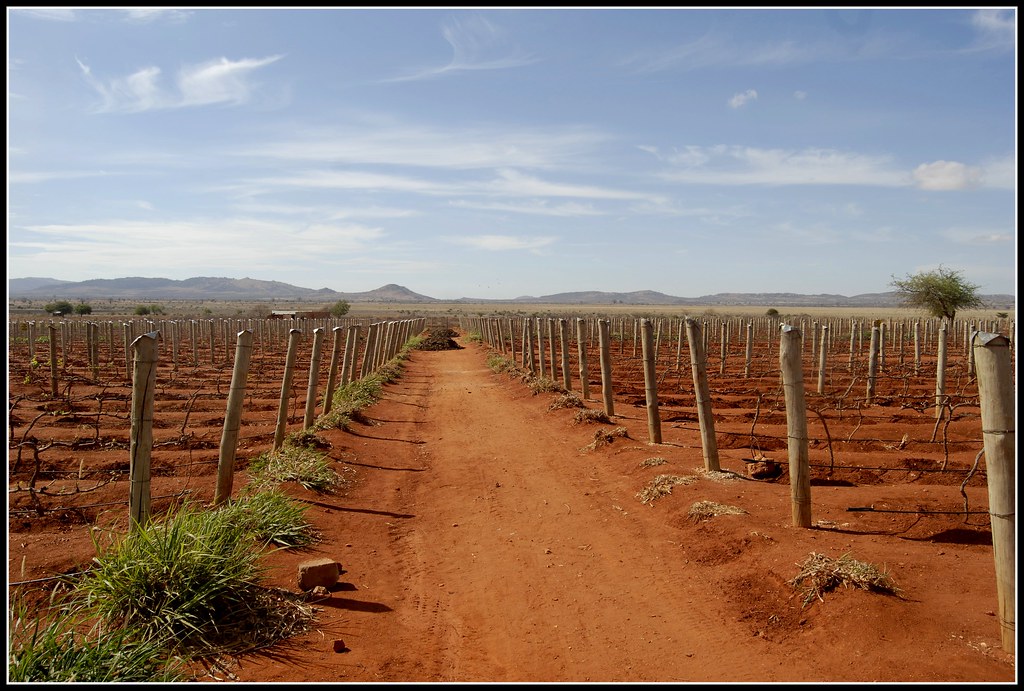
So "Roadtrip Tanzania" took us from Arusha in the north down to Dodoma in the center of Tanzania. Google maps optimistically calls this a five and a half hour drive, but we took two days getting down there and on the return trip we drove pretty much straight through with barely even a hasty stop for lunch and it took us an entire day.

Dodoma is a relatively small city, / big town (pop: 410,956), but because it's in the center it is the capitol of Tanzania. Mizengo Pinda is the Prime Minister of Tanzania. And I don't know much about his politics but I can say this: he is a beekeeper. Not like Obama, who "has" a beehive in the sense that he had one put on the White House grounds, which don't get me wrong is pretty cool, but Mr Pinda apparently takes an active interest in his bees and has been known to go off on tangents about them at meetings. And he went to a bee conference and invited us all us bee people a soiree!
I think maybe to solve the world's problems, instead of concentrating on teaching poor people beekeeping, maybe I should start a programme to teach world leaders beekeeping. Can you imagine Putin and Obama sitting there glowering at eachother, as they do, until finally Putin says "hey what have you been doing to keep your bees from getting nosema?" and then Obama lights up and leans forward to explain his latest techniques. I could see it. ;D
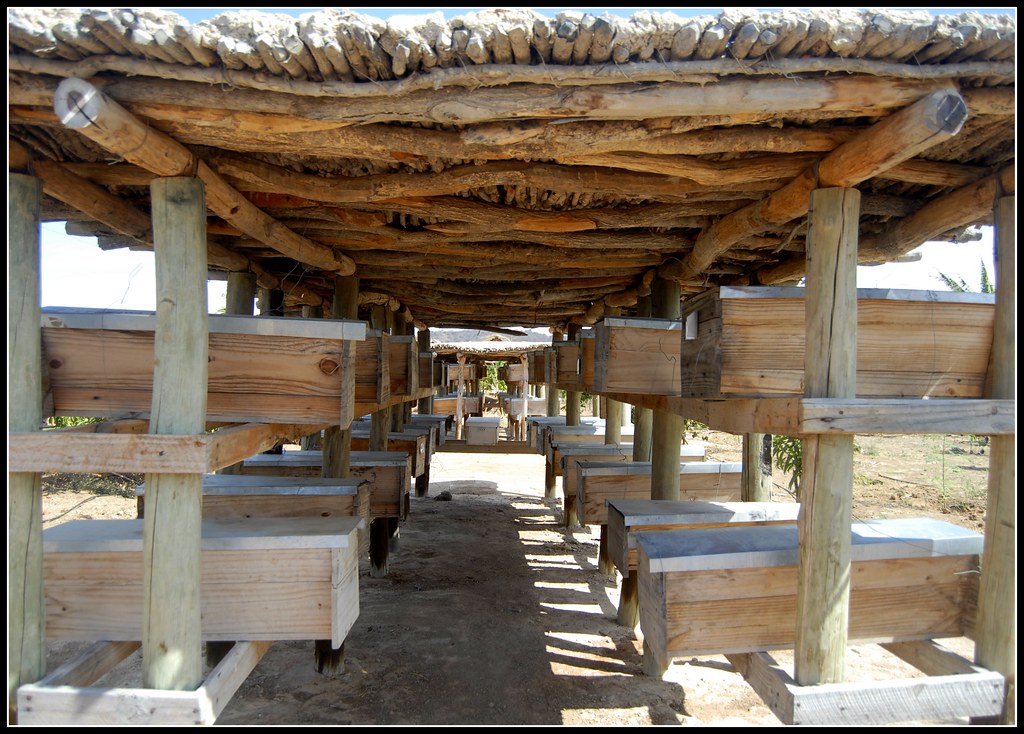
Anyway near Dodoma is Mr Pinda's personal farm. He has over 400 beehives in sheds like the above, as well as acres of fruit trees (mango, guava, banana, pineapple etc etc).

My friend Shimon, from Israel, acquired a guava from the farm (with permission of the farm manager). He distributed the seeds to myself, our friend Doug (from Washington State), and himself, so we'll see if we can all have a memento guava tree ... though I'm not optimistic about the Washington one.

And this is where bananas come from. I knew that but I was surprised to learn that each banana tree grows in one season, makes one giant flower and one bunch of bananas, and then dies and grows again from the ground up the next year.

Also there was this cat I almost didn't see, resting on top of a beehive. I think of it as named Zuzu, though every hive is labeled that (don't know what it means).

Also this large lizard. I'm not sure you can get a sense of size from that picture but it was at least as long as my forearm.

And of course goats.
( All pictures from the farm )


![[identity profile]](https://www.dreamwidth.org/img/silk/identity/openid.png)
no subject
Date: 2015-01-24 09:09 pm (UTC)no subject
Date: 2015-01-24 09:16 pm (UTC)Also thanks (:
You know with all the other manly things Putin is always doing, you know, wrestling bears without a shirt on and such, I'm surprised there AREN'T any pictures of him going through a beehive, presumably shirtless and without smoking them first.
no subject
Date: 2015-01-24 09:18 pm (UTC)Great post
no subject
Date: 2015-01-24 09:22 pm (UTC)no subject
Date: 2015-01-24 09:27 pm (UTC)Well, probably not technically. It looks quite warm.
But, very interesting!
no subject
Date: 2015-01-24 09:31 pm (UTC)no subject
Date: 2015-01-24 09:30 pm (UTC)no subject
Date: 2015-01-24 09:44 pm (UTC)Honeybees (Apis mellifera) are not native to the Americas. They were brought here by the European colonists from Europe. So in Brazil around the 50s they were like "why are we trying to use temperate bees from Europe in the tropics!? let's get some tropical bees!" ... so they brought some bees from Southern Africa, which turned out to be Apis mellifera scutellata, the Savannah bee, and bred them with Apis mellifera mellifera from Europe and.... in a classic mad scientist tale the bees were not only incredibly bad tempered, they escaped! And the rest is history!
But to answer your actual question, they have a wide variety of honeybees from the African subgroup. I think they have some Apis mellifera adonsonii which is predominant in Western Africa and possibly some scutellata which is more dominant to the south. They are all more aggressive than European honeybees but not as bad as the "killer bees." Also much more "crawly" (by the time I finish going through a beehive most of the bees will have crawled out of the box and be covering the outside), and much more prone to "abscond" and leave the area when there's not enough food.
Sorry for the really long answer. What can I say, I like to talk about bees ;D
no subject
Date: 2015-01-25 05:49 am (UTC)no subject
Date: 2015-01-24 09:37 pm (UTC)I didn't know the one flower, one bunch thing about banana plants either. Thanks for sharing :)
no subject
Date: 2015-01-24 10:09 pm (UTC)no subject
Date: 2015-01-24 10:58 pm (UTC)no subject
Date: 2015-01-25 07:34 pm (UTC)no subject
Date: 2015-01-25 02:49 am (UTC)Are each of those bee boxes a separate hive with its own queen? Beekeepers around here tend to stack the boxes pretty high, is there a reason why they have single box hives there? So very intriguing.
no subject
Date: 2015-01-25 07:37 pm (UTC)There's two different reasons most of the boxes seen here don't stack, (1) I'm told the local bees simply don't ever build colonies that big; (2) see how the hives are longer than the usual boxes seen in Europe and America? They're "topbar" hives that expand horizontally instead of vertically.
To a certain degree I suspect the belief that they don't get as big might just be because they don't know how to shepherd a hive into such a degree of success. I don't believe any pessimistic predictions until I've tested them! (: I hope some day to get a chance to spend some months working with bees in Africa.
no subject
Date: 2015-01-25 05:51 am (UTC)no subject
Date: 2015-01-25 07:38 pm (UTC)no subject
Date: 2015-01-26 05:37 am (UTC)no subject
Date: 2015-01-25 10:37 am (UTC)I think you should publish your travels.
no subject
Date: 2015-01-25 07:39 pm (UTC)no subject
Date: 2015-01-26 07:23 pm (UTC)Love the cat and lizard pics:)
no subject
Date: 2015-01-27 01:25 am (UTC)no subject
Date: 2015-01-27 05:02 pm (UTC)